





2026 Chevy Trax MPG & Fuel Economy Guide
EPA ratings, real-world mileage, and honest range math for the 2026 Chevy Trax from Lash Chevrolet in Johnstown, OH.
How Many MPG Does the 2026 Chevy Trax Get?
The 2026 Chevy Trax carries an EPA-estimated 28 city / 31 highway / 29 combined mpg, and every trim earns the same rating because all five share one 1.2L turbocharged three-cylinder, a six-speed automatic, and front-wheel drive. Its 13.2-gallon tank works out to roughly 370 city miles, 409 highway miles, or about 383 miles of mixed driving per fill on regular 87-octane. Full trim, engine, and feature details live on our 2026 Chevrolet Trax model page.
Gas money is the part of a car payment nobody writes on the paperwork. It shows up twenty dollars at a time, week after week, and over four or five years it quietly adds up to more than most people expect. That is exactly the math the Trax was built to win.
Chevrolet's smallest SUV asks a simple question: how much vehicle do you actually need? For a lot of drivers around Johnstown, the answer is a subcompact crossover that swallows a Costco run, parks anywhere in New Albany, and sips fuel on the OH-161 commute. Our 2026 Chevy Trax in Johnstown, OH lineup covers all five trims, and they all return identical mileage.
This guide gives you the numbers without the sales gloss. You will get the official EPA figures, the reason those figures changed from last year, real tank-range math, the seasonal swings Ohio drivers actually feel, and the handful of habits that move the needle most. No fluff, no invented averages.
Key Takeaways
- EPA-estimated 28 city / 31 highway / 29 combined mpg, identical across the LS, 1RS, LT, 2RS, and ACTIV trims
- One powertrain for the whole lineup: a 1.2L turbo three-cylinder making 137 horsepower and 162 lb-ft, paired to a six-speed automatic
- Front-wheel drive only for 2026 — there is no all-wheel-drive or hybrid Trax, so no drivetrain choice splits the ratings
- A 13.2-gallon tank delivers roughly 370 city, 409 highway, and 383 combined miles between fills
- Regular 87-octane is all it asks for, which saves real money against premium-only rivals
- At Ohio's recent average near $3.90 a gallon, 12,000 miles a year costs about $1,615 — roughly $135 a month
Understanding the 2026 Chevy Trax's Fuel Efficiency
Efficiency is not a footnote on the Trax. It is the whole argument. Chevrolet gave this SUV one of the smallest engines in its showroom, kept the curb weight under 3,000 pounds, and skipped all-wheel drive entirely — every one of those decisions was made in service of the number on the window sticker.
That single-minded approach is why the Trax behaves differently from most crossovers when you shop it. There is no thirsty V6 upgrade to avoid, no AWD penalty to weigh, and no efficiency-versus-features trade-off buried in the trim walk. You pick the Trax you like the look of and the mileage comes along unchanged.
What follows is how that plays out in Licking and Franklin County driving: on the two-lane roads around Johnstown, on the OH-161 run toward Columbus, and in the January cold that takes a bite out of everybody's mileage.
Why Fuel Economy Matters for Our Compact SUV Choice
Run the arithmetic before you sign anything. At 29 mpg combined and Ohio's recent average near $3.90 a gallon, the Trax costs about 13.4 cents per mile in fuel. A 22-mpg crossover costs about 17.7 cents. Spread over 12,000 miles a year, that four-cent gap is roughly $510 — and over a five-year loan, more than $2,500.
Local trips make it concrete. Johnstown to downtown Columbus and back is close to 56 miles; in a Trax that is under two gallons and about $7.50. Do that commute four days a week and you are spending roughly $130 a month to get to work, not $170.
There is a convenience dividend too. A 29-mpg SUV asks less of your week than a 22-mpg one simply because you drive past the pump more often than you pull into it. Fewer stops in a Johnstown January is worth something no spreadsheet will show you.
| Fuel Economy Factor | What the Trax Delivers | Why It Matters |
|---|---|---|
| Cost Per Mile | About 13.4 cents at 29 mpg combined | Roughly four cents a mile less than a typical 22-mpg crossover |
| Annual Fuel Budget | About $1,615 at 12,000 miles a year | A predictable line item you can plan around instead of guess at |
| Range Per Fill | Roughly 370 to 409 miles from 13.2 gallons | Weekly errands and a Columbus commute on a single tank |
| Fuel Grade | Regular 87 octane, premium not required | Avoids the 40-to-70-cent premium surcharge some rivals demand |
What Makes the Trax Stand Out
The engine is the headline. A 1.2-liter turbocharged three-cylinder is genuinely small — smaller than what most competitors put under the hood — yet it produces 137 horsepower and 162 lb-ft of torque, and that torque arrives at just 2,500 rpm. Low-rpm pull is what makes a small engine feel unbothered in traffic instead of strained.
Weight is the quieter advantage. At roughly 2,994 pounds, the Trax is several hundred pounds lighter than the compact SUVs a shopper often cross-shops. Every pound the engine does not have to accelerate away from a stop sign is fuel it does not have to burn.
Size is where it stops feeling like a compromise. The Trax stretches nearly as long as some compact crossovers, so there is 25.6 cubic feet behind the rear seats and 54.1 cubic feet with them folded. That is a stroller and a week of groceries, or a dorm move, in a vehicle rated at 29 mpg.
It is also well equipped for the money. Chevy Safety Assist is standard on every trim, an 11-inch diagonal infotainment display is available, and the trip computer reports live fuel economy — which turns out to be the cheapest efficiency upgrade there is, because watching the number changes how you drive.
What We'll Explore in This Guide
We start with the official EPA numbers, including the change from the 2025 rating that explains why you will still see 30 mpg quoted in some places. Getting that straight matters, because a stale figure throws off every budget built on it.
From there we walk the trim lineup. It is a short walk — all five trims carry the same rating — but it is worth understanding why, and what genuinely does and does not affect your mileage when you pick a Trax.
Then we open the hood. Three cylinders, one turbo, and six gears is an unusual recipe for an SUV, and each piece of it is doing specific work on your fuel bill.
Next comes the gap between the sticker and the pump. City versus highway, summer versus a Johnstown February, an empty cargo area versus a loaded roof box — these are the variables that decide what you actually average.
We close with the fixes worth your time, ranked by how much they actually return. Some are worth thirty percent. Some are worth nothing. Our service team at Lash Chevrolet sees the difference between the two every day.
2026 Trax Fuel Economy: Official EPA Ratings
The EPA tests every new vehicle on the same laboratory cycles so shoppers can compare apples to apples. Those tests are where the window-sticker numbers come from, and they are the only figures a dealership should be quoting you.
For 2026 the Chevy Trax is rated 28 mpg city, 31 mpg highway, and 29 mpg combined. One engine, one transmission, one drivetrain — so unlike most SUVs, there is no second set of numbers to check before you commit to a trim.
City Driving Efficiency Numbers
Twenty-eight mpg in the city is the figure that earns the Trax its keep. Stop-and-go driving is brutally inefficient for any vehicle, because every green light means converting fuel into forward motion from a dead stop and every red light means throwing that motion away as brake heat.
The Trax fights back with physics rather than technology. A sub-3,000-pound curb weight means there is simply less mass to get moving, and the turbo three-cylinder's 162 lb-ft at 2,500 rpm means it does not need a big throttle opening to do it.
In practical terms, 28 mpg city is about 3.6 gallons per 100 miles, or roughly 13.9 cents a mile in fuel at $3.90 a gallon. That is what school runs, grocery trips, and the drive to work in Johnstown proper actually cost.
Open Road Performance
On the highway the Trax is rated 31 mpg. Steady-state cruising is the easiest work an engine ever does: no acceleration events, no braking losses, the transmission settled in top gear and the engine turning slowly.
Aerodynamics matter more here than anywhere else, and this is where a subcompact SUV shows its shape. The Trax has a lower roofline and a smaller frontal area than a three-row SUV, so it pushes less air aside at 65 mph on OH-161 or I-70.
Thirty-one mpg works out to about 3.2 gallons per 100 miles, or roughly 12.6 cents a mile. On a 200-mile trip that is about $25 of fuel — the kind of number that makes a spontaneous weekend somewhere feel reasonable.
The Balanced Efficiency Picture
The combined rating of 29 mpg is a weighted blend of 55% city and 45% highway driving, which is the EPA's model of how a typical American actually drives. For most people it is the single most useful number of the three.
One important note: the 2025 Trax was rated 28/32/30, and the 2026 rating is one mpg lower on the highway and combined figures. The mechanical package did not change, so if you come across "30 mpg combined" in older brochures, a carryover listing, or even an OEM page that has not refreshed, that is a 2025 number rather than an error to argue about.
Here is how the three official figures translate into the terms that matter at the pump:
| Driving Cycle | EPA MPG | Gallons Per 100 Miles | Miles Per 13.2-Gallon Tank |
|---|---|---|---|
| City | 28 MPG | 3.6 gallons | About 370 miles |
| Highway | 31 MPG | 3.2 gallons | About 409 miles |
| Combined | 29 MPG | 3.4 gallons | About 383 miles |
Treat these as your baseline, not your destiny. The EPA cycles use a warm engine, mild temperatures, no passengers beyond the driver, and no cargo — conditions you will beat on a June road trip and fall short of on a February morning. The rest of this guide is about that gap.
Chevrolet Trax Fuel Economy Specs Across All Trims
Here is the part that makes shopping a Trax refreshingly simple: the trim you choose has no effect on your EPA rating. LS, 1RS, LT, 2RS, and ACTIV all run the same 1.2L turbo three-cylinder, the same six-speed automatic, and the same front-wheel drive. Same numbers, top to bottom.
Compare that to almost any other SUV, where an engine upgrade or an all-wheel-drive box costs you two or three mpg and forces a real decision. In a Trax, styling, screen size, seat material, and driver-assist content are the only things separating the trims — you are never paying for features in fuel.
The table below lays out all five trims alongside last year's rating, so the one-mpg change is easy to see in context.
| Trim Level | Drivetrain | City MPG | Highway MPG | Combined MPG |
|---|---|---|---|---|
| LS | FWD | 28 | 31 | 29 |
| 1RS | FWD | 28 | 31 | 29 |
| LT | FWD | 28 | 31 | 29 |
| 2RS | FWD | 28 | 31 | 29 |
| ACTIV | FWD | 28 | 31 | 29 |
| 2025 Trax (all trims) | FWD | 28 | 32 | 30 |
| Change vs. 2025 | No change | None | −1 MPG | −1 MPG |
Base Model Efficiency Performance
The LS is the entry point and it is not a penalty box. It gets the same 137-horsepower turbo, the same 29 mpg combined rating, and the same standard Chevy Safety Assist suite as the trim above it. What you give up is screen size and cosmetic content, not capability or economy.
For a commuter buying strictly on running cost, the LS is the whole argument in one trim: lowest price of entry, identical fuel bill to the top of the range. Nothing about stepping up to a nicer Trax will save you a dollar at the pump.
It is also the lightest configuration in the lineup, since the heavier optional equipment lives on trims above it. The EPA does not resolve that difference, but on a long highway run a few pounds never hurt anyone.
Most Popular Configuration Ratings
The LT is where most shoppers land, and it is easy to see why. It layers on the larger available infotainment display, more comfort and convenience content, and additional driver-assistance features while holding at 28 city, 31 highway, and 29 combined mpg.
This is the trim that makes the Trax's one-powertrain strategy pay off. On most SUVs, moving up the range means either accepting a mileage hit or paying more for the efficient engine. Here the mid-trim upgrade is a pure feature purchase.
If you split your week between Johnstown errands and a Columbus commute, the LT is the balanced pick — enough technology to make the highway miles pleasant, without a cent of extra fuel cost for the privilege.
Sport and Premium Mid-Range Options
The 1RS and 2RS trims are the sporty-looking Traxes. They bring darker exterior accents, red interior stitching, unique grille treatments, and a more aggressive stance. Notably, none of it changes the EPA rating.
That is worth pausing on, because on many vehicles a sport appearance package includes wider wheels and tires that quietly cost a mpg or two. The RS trims keep the same rating as the LS, so the sportiness is genuinely cosmetic where your fuel bill is concerned.
The 1RS sits closer to the LT in equipment and price, while the 2RS is the fully loaded sport version. Both return 29 mpg combined and roughly 383 miles per tank, identical to every other Trax.
What the RS trims do change is how the Trax drives in your head. A car you enjoy tends to get driven a little harder, and a heavier right foot is the one variable that genuinely costs you mileage — a point we come back to later in this guide.
Top-Trim ACTIV Efficiency
The ACTIV is the rugged-looking end of the Trax range: distinctive front and rear styling, unique wheel design, and interior trim meant to look ready for a trailhead. It sits at the top of the lineup on price.
It still returns 28 city, 31 highway, and 29 combined mpg. There is no efficiency premium for the top trim, and — this catches some shoppers out — no all-wheel drive to go with the adventurous styling. The ACTIV is front-wheel drive like every other 2026 Trax.
That is an honest thing to know before you shop. If you need all-wheel traction for a gravel lane or a Licking County winter, the Trax is not the vehicle, and we would rather point you at a Trailblazer or Equinox than sell you the wrong SUV.
If what you actually want is the look, the cargo room, and the low running cost, the ACTIV delivers all three at 383 miles a tank. Our team can walk you through the trim differences in person at the Johnstown store.
Shopping a step up in size? Our Chevy Equinox trim levels guide breaks down the next crossover in the lineup, including the all-wheel-drive options the Trax does not offer.
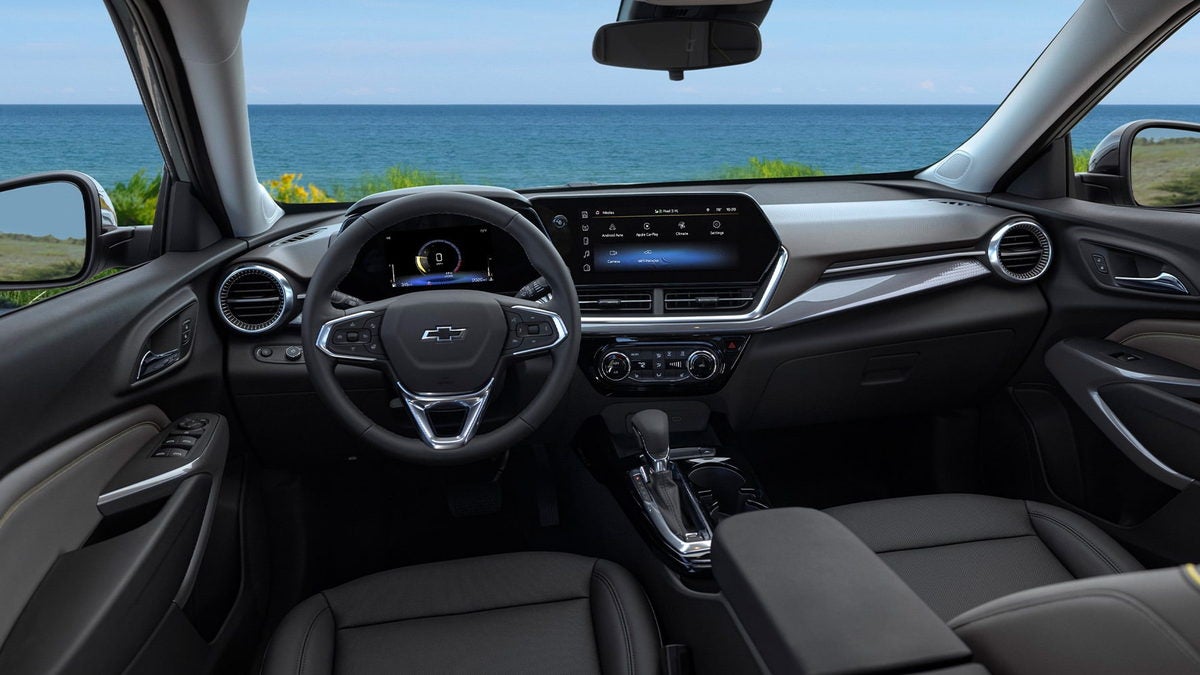
Every Trax reports live fuel economy on the driver display — the cheapest efficiency upgrade in the vehicle.
Engine Technology and Its Impact on Chevy Trax MPG
Twenty-nine mpg combined out of a vehicle with 54 cubic feet of cargo space is not an accident. It comes from a specific set of engineering choices, and understanding them tells you a lot about how the Trax will behave once it is your daily driver.
2026 Trax Engine Options and Specifications
There is exactly one engine: a 1.2-liter turbocharged inline three-cylinder from Chevrolet's Ecotec family. It makes 137 horsepower at 5,000 rpm and 162 lb-ft of torque at 2,500 rpm, and it is the only powertrain offered across the entire 2026 Trax range.
Those numbers deserve context. One-point-two liters is genuinely small, less displacement than many compact sedans use, yet the torque figure is what you actually feel in traffic, and 162 lb-ft arriving at 2,500 rpm means the Trax pulls away from a light without drama or a downshift.
Having a single engine is a deliberate simplification, and a shopper-friendly one. There is no "efficiency engine" versus "performance engine" decision to agonize over, no upcharge for the frugal option, and no possibility of accidentally buying the thirsty version.
Turbocharged Efficiency Technology
A turbocharger is a small turbine spun by exhaust gas that would otherwise leave the tailpipe as waste heat. That turbine drives a compressor, forcing more air into the cylinders so the engine can burn more fuel and make more power — but only in the moments you ask for it.
That "only when asked" part is the entire efficiency story. Cruising at 60 mph on OH-37, the Trax is running as the tiny 1.2-liter engine it is, burning fuel accordingly. Merging onto I-70, the turbo spools and it briefly behaves like something considerably larger.
The third cylinder that is not there matters too. Dropping from four cylinders to three removes a piston, a connecting rod, and a full set of valves — less internal friction to overcome and less mass to accelerate, every single revolution.
| Engine Feature | Technology Benefit | Fuel Economy Impact |
|---|---|---|
| 1.2L Displacement | The smallest displacement Chevrolet puts in an SUV | Less fuel burned simply keeping the engine turning |
| Three-Cylinder Layout | One fewer piston, rod, and valve set than a four | Reduced internal friction and rotating mass |
| Turbocharging | Recycles exhaust energy into on-demand boost | Cruises like a small engine, accelerates like a bigger one |
| 162 lb-ft at 2,500 RPM | Peak torque available just off idle | Less throttle needed to get moving from a stop |
Transmission System and Fuel Optimization
Behind the engine sits a six-speed automatic. In an era of eight-, nine-, and ten-speed gearboxes, six can look like a shortfall on paper — but the ratio spread was chosen to suit an engine that makes its torque low and early, and the result is a transmission that hunts for gears far less than the spec sheet suggests.
Fewer gears also means fewer shift events, and every shift carries a small energy cost. On a steady highway run the difference between six and eight speeds is largely academic; what matters is that top gear is tall enough to keep engine speed low at 65 mph.
How the 6-Speed Automatic Enhances Efficiency
The transmission's job is to keep the engine in its efficient rpm band as much of the time as possible. At a cruise it grabs the tallest gear the load allows, dropping revs and cutting the number of combustion events per mile.
Around town it works the opposite way, holding lower gears where the torque is, so the engine never has to strain against a ratio that is too tall. That is why 28 mpg city and 31 mpg highway sit only three mpg apart — a much narrower spread than most SUVs manage.
The transmission also learns, within limits, from how you drive. Consistently gentle throttle inputs earn earlier upshifts and a calmer shift schedule. Drive it hard and it will hold gears longer to stay ready for the next request, which costs fuel exactly as you would expect.
Trax City Highway MPG: Breaking Down the Differences
The gap between the Trax's city and highway ratings is only three mpg, which is unusually tight. Understanding why tells you where your own mileage will land.
Most vehicles show a much wider spread because their engines are sized for highway confidence and are therefore oversized for creeping through town. The Trax is sized for town, and the turbo covers the highway — so neither cycle catches it badly out of its depth.
Still, three mpg is three mpg. Where you drive around Johnstown, Alexandria, and Columbus will decide which end of the range you live at.
What Affects City Driving Fuel Consumption
City driving punishes fuel economy for one fundamental reason: you keep paying to accelerate mass, then throwing that energy away in the brakes. A Trax without regenerative braking recovers none of it.
The Trax's defense is its light weight. Getting roughly 2,994 pounds moving takes meaningfully less energy than getting a 4,400-pound three-row SUV moving, which is most of why the city figure holds up at 28 mpg.
Stop-and-Go Traffic Impact
Every launch from a standstill is the most expensive thing your engine does. Add a red light every quarter mile and a great deal of your fuel goes into acceleration events rather than distance covered.
Idling compounds it. A vehicle sitting still is getting zero miles per gallon while still burning roughly a quarter to a half gallon an hour. Long waits at the OH-37 and OH-161 lights add up more than most drivers realize.
Urban Driving in Johnstown and Central Ohio
Short trips are the quiet mileage killer around here. A run to the Johnstown square, the school, or the post office may never let the engine reach full operating temperature, and a cold engine runs a richer mixture the whole time.
The commute west into New Albany, Westerville, or the I-270 outerbelt is a different problem — genuinely stop-and-go at rush hour, with the added cost of climate control running the whole way. Expect numbers near or slightly below the 28 mpg city figure on those mornings.
Highway Driving Efficiency Advantages
Settle the Trax onto OH-161 or I-70 at a steady speed and everything improves at once. There are no acceleration events, no braking losses, and the transmission stays in top gear with the engine turning slowly.
Momentum becomes your ally instead of your expense. Once the vehicle is up to speed, the engine's only remaining jobs are overcoming aerodynamic drag and tire rolling resistance — and the Trax's modest frontal area keeps the first one in check.
This is where the 31 mpg highway figure gets beaten in the real world. Warm weather, flat Central Ohio terrain, a light load, and a patient right foot regularly add a couple of mpg over the sticker.
Optimal Highway Speeds for Best MPG
Aerodynamic drag rises with the square of speed, which is why fuel economy typically starts falling off sharply above about 50 mph. The Trax's sweet spot on a rural highway sits in the 55-to-65 mph range.
Push to 75 or 80 on the interstate and the penalty is real. Each extra 5 mph past that point costs meaningfully more fuel than the same 5 mph did lower down the scale, and you are trading dollars for a handful of minutes.
Route choice matters as much as speed. The OH-161 run toward Columbus, held at a steady 65, will beat an I-70 stretch full of construction slowdowns and re-accelerations even though the interstate has the higher speed limit.
Mixed Driving Scenarios We Encounter Daily
Almost nobody drives a pure city or pure highway cycle. A normal week is a blend, which is exactly what the 29 mpg combined rating is built to describe.
A typical Johnstown pattern — surface streets to OH-161, a highway stretch, then surface streets again at the far end — tends to average out very close to the combined figure. That makes 29 mpg a genuinely reliable planning number.
Errand days skew lower. Six short stops around town with the engine cooling between each one can land well under the city rating, especially in cold weather.
Road trip days skew higher. A single long highway run with one stop is the most efficient driving a Trax will ever do, and the trip computer will show it.
Rather than guessing, use the trip computer for two full tanks and calculate it yourself: miles driven divided by gallons added. That is your real number, and it is the only baseline worth improving on.
Trax Real World MPG: Actual Owner Experiences
A laboratory number and a pump receipt are two different things. The EPA cycles exist to make vehicles comparable, not to predict your February commute — so here is what typically separates the two, and how to read your own results honestly.
How Real World Results Compare to EPA Estimates
EPA testing runs on a dynamometer at controlled temperatures with a warmed engine, a single occupant, no cargo, and climate control off. It is repeatable by design, which is precisely what makes it useful for comparison and imperfect as a forecast.
In practice, a patient driver doing mostly highway miles in mild weather can beat the 31 mpg highway rating. A driver doing short cold-start hops with the heat on full will fall short of the 28 mpg city figure. Both outcomes are normal, and neither means anything is wrong with the vehicle.
The reasonable expectation is this: over a full year of mixed Ohio driving, most Trax owners should land within a couple of mpg of 29 combined, with summer months above and winter months below. If you are wildly off that, it is usually tire pressure, a driving habit, or a maintenance item — all fixable.
Variables That Influence Actual Fuel Economy
The variables that move your mileage are not exotic. Weather and terrain are the two you cannot control, and they explain most of the month-to-month swing you will see on the trip computer.
Climate and Weather Conditions
Cold is the biggest single factor in an Ohio winter, and the effect is well documented. Department of Energy testing puts city fuel economy roughly 15% lower at 20°F than at 77°F for a conventional gasoline vehicle, and as much as 24% lower on short three-to-four-mile trips.
Applied to the Trax, a 15% haircut takes 29 mpg combined down to about 25, and a full tank from 383 miles to roughly 325. That is not a defect — it is the same physics every gasoline vehicle in Licking County is dealing with in January.
Summer is gentler. Heat helps the engine reach operating temperature quickly, and while air conditioning costs fuel, the net penalty is far smaller than winter's. Spring and fall are when you will see your best numbers of the year.
Terrain and Elevation Changes
Central Ohio is kind to fuel economy. The terrain between Johnstown, Sunbury, and Columbus is flat to gently rolling, with no sustained climbs to make a 137-horsepower engine work hard for miles at a stretch.
Rolling hills are close to a wash. Fuel spent climbing is partly recovered coasting down the far side, provided you let the Trax coast rather than accelerating up and braking down.
Where hills genuinely cost you is when they force downshifts. A small turbocharged engine on a long grade will drop a gear and spin faster to hold speed, and that is exactly when the fuel-flow readout jumps. Easing off and accepting a few mph less over the crest is the cheaper choice.
What Our Lash Chevrolet Customers Report
We talk to Trax owners in the service drive every week, and a few patterns come up consistently. The first is that highway-heavy drivers are almost always pleased — the Trax tends to meet or beat its highway rating once it is warm and cruising.
The second is that short-trip drivers see the widest seasonal swing. Owners whose driving is mostly quick runs around Johnstown notice a real drop between October and March, then watch it come back in the spring without doing anything differently.
The third is about the trip computer. Owners who pay attention to the live fuel economy readout end up driving more smoothly, almost without meaning to, and their averages reflect it. It is the cheapest efficiency modification available and it comes standard.
The last one is a caution: the single biggest complaint-turned-fix we see is tire pressure. A Trax running four or five psi low all winter is quietly giving away mileage, and it takes about three minutes to correct. Our service team will check it for free while you wait.
2026 Trax Fuel Tank Capacity and Maximum Range
Range is the number that actually shapes your week — not mpg on its own, but mpg multiplied by how much fuel the vehicle holds. It decides how often you stop and how far you can go before planning around gas stations.
The Trax takes an interesting approach here: a small tank paired with strong efficiency, which nets out to more range than the tank size alone would suggest.
Fuel Tank Size and Capacity Details
The 2026 Chevy Trax holds 13.2 gallons. That is a modest tank by SUV standards, and it is the same on every trim since there is only one drivetrain configuration in the lineup.
A smaller tank has a practical upside people rarely mention: filling up costs less each time. At $3.90 a gallon, a fill from near-empty runs about $50 rather than the $75 or more a mid-size SUV asks for. The money evens out over the year, but the individual transaction stings less.
It also runs on regular 87-octane. Premium is not required, which is worth 40 to 70 cents a gallon against rivals that specify it — roughly $5 to $9 saved on every single fill.
Calculating Your Maximum Driving Range
The math is simply tank capacity multiplied by miles per gallon. Thirteen-point-two gallons at 29 mpg combined gives about 383 miles; at the 31 mpg highway figure it stretches to roughly 409 miles.
Treat those as theoretical maximums, though. Nobody should plan on running a tank completely dry, so subtract a gallon or so of buffer and think in terms of roughly 330 to 370 usable miles depending on how you are driving.
City Range Estimates
At the 28 mpg city rating, a full 13.2-gallon tank covers about 370 miles of town driving. For a lot of Johnstown drivers that is genuinely a week and a half of errands.
Consider a typical local commute: Johnstown to New Albany is roughly a 14-mile run each way, or about 28 miles a day. Ten workdays is 280 miles, which fits inside one tank with errands to spare.
In an Ohio January, plan on less. With winter's roughly 15% penalty, that same tank realistically covers something closer to 315 miles of city driving — still better than a week for most people.
Highway Range Capabilities
Highway is where the Trax stretches its legs. At 31 mpg, 13.2 gallons is about 409 miles — enough that the trip gets planned around meals and legs rather than fuel.
Practically, with a sensible reserve, treat 360 to 380 highway miles as your comfortable single-tank distance. That covers a surprising amount of the Midwest from Licking County.
Here is what one highway tank realistically reaches from Johnstown:
- Cleveland and back on a single fill, with range left in reserve
- A one-tank run east to Pittsburgh, or south to Cincinnati, without stopping for fuel
- Indianapolis one-way with a comfortable margin still on the gauge
- Roughly two weeks of a Johnstown-to-New Albany commute between visits to the pump
Planning Errands and Road Trips with Confidence
Range changes how you think about a vehicle. Once you know a tank is good for most of a week, the gas station stops being a scheduled errand and becomes something you handle when it is convenient.
For local driving, that means one fill on the way home from work covers the school run, the grocery trip, practice, and the weekend without another thought.
For road trips, 400-ish highway miles means your stops are driven by coffee and legs rather than the fuel gauge. On a drive to Chicago or Nashville you are looking at one planned fuel stop, not three.
The one place to stay alert is winter highway driving with a full load. Cold air, four passengers, and a loaded cargo area at 70 mph can pull real-world range down toward 300 miles, so top off earlier than usual on a January trip.
If you want to see how the numbers hold up on your own routes, the honest test is a test drive on roads you actually use. Take one out on OH-161 and watch the trip computer for yourself.
Key Factors Affecting Your 2026 Trax Fuel Consumption
Your Trax will not return the same number every month, and the reasons are predictable once you know what to look for. Some of them are weather and physics; others are entirely within your control.
The useful way to think about this is by size of effect. Driving style is worth tens of percent. Tire pressure is worth a few. A clean cargo area is worth a fraction. Spend your attention accordingly.
Seasonal and Weather-Related MPG Changes
Ohio hands the Trax four genuinely different operating environments a year, and the trip computer notices. A drop of three or four mpg between August and January is completely normal.
Winter and summer both cost you, but not equally, and not for the same reasons. Winter is the expensive one.
Cold Weather Impact on Fuel Efficiency
Department of Energy figures put city fuel economy about 15% lower at 20°F than at 77°F, and up to 24% lower on short three-to-four-mile trips. For the Trax that means roughly 25 mpg combined instead of 29 through a Johnstown cold snap.
Small-displacement turbocharged engines feel this a little more acutely than large ones, because a 1.2-liter engine takes longer to generate enough waste heat to warm itself and the cabin. Until it is up to temperature, it runs a richer fuel mixture.
Several separate penalties stack up at once in cold weather:
- The engine runs a richer mixture until it reaches full operating temperature, which takes longer in the cold
- Engine oil and transmission fluid thicken, so more energy goes into simply turning the drivetrain
- Cabin heat, the rear defroster, heated seats, and heated mirrors all add electrical load
- Tire pressure falls roughly 1 psi for every 10-degree temperature drop, raising rolling resistance
- Cold, dense air increases aerodynamic drag at highway speed
The good news is that all of it is temporary and none of it requires a repair. The single most effective winter habit is to skip the long warm-up idle — the Trax warms up faster being driven gently than sitting in the driveway, and idling returns zero miles per gallon.
Summer Heat and Air Conditioning Use
Air conditioning does cost fuel, because the compressor draws power from the engine. On a very short trip in peak heat the penalty can exceed 25%, though on a longer drive with the cabin already cooled it settles down to a few percent.
The trade-off flips with speed. Below about 40 mph, open windows are usually the cheaper way to stay cool. At highway speed the aerodynamic drag from open windows costs more than the compressor does, so close them and run the AC.
Two small habits help. Park in the shade when you can, so the system is not fighting a 140-degree cabin from a standstill, and run the fan on fresh air for the first minute to push the hot air out before switching to recirculate.
Load, Cargo, and Passenger Weight Effects
Weight matters more in a light vehicle than a heavy one. Roughly speaking, every extra 100 pounds costs about 1% in fuel economy — and 100 pounds is a larger share of a 2,994-pound Trax than of a full-size SUV.
Normal use is not worth worrying about. Passengers, a stroller, groceries, and a couple of gym bags are what the vehicle is for, and their combined effect is small enough that you will not spot it on the trip computer.
What does show up is aerodynamics. Anything on the roof changes the shape of the vehicle, and shape is what the Trax spends its highway fuel fighting. Here is how the various loads compare:
- Passengers and everyday cargo: roughly 1% per additional 100 pounds
- A loaded rooftop cargo box: commonly a 6% to 17% highway penalty on an SUV, and more at interstate speed
- Empty crossbars left on year-round: a small but real drag cost for zero benefit
- Gear that permanently lives in the cargo area: quiet, continuous weight you have stopped noticing
The practical rule is to take the roof box off when the trip is over and clear out the cargo area every few months. Neither takes long and both are free.
Tire Maintenance and Pressure Optimization
Tire pressure is the highest-return maintenance item on this list. Keeping tires properly inflated can improve fuel economy by up to about 3%, and underinflation is by far the most common cause of unexplained mileage loss we see.
Pressure drops on its own — about 1 psi a month from normal permeation, plus another 1 psi for every 10-degree drop in temperature. That is why a Trax filled to spec in September can be meaningfully low by December without anyone touching it.
The correct pressure is on the label inside the driver's door jamb, not on the tire sidewall. The sidewall number is a maximum, not a recommendation, and inflating to it will cost you ride quality and even tire wear.
A short maintenance routine covers almost all of it:
- A monthly pressure check with an actual gauge, including the spare if your Trax carries one
- A seasonal top-off when Ohio temperatures swing, especially heading into winter
- Rotation every 5,000 to 7,500 miles, which pairs neatly with oil changes
- An alignment check if the Trax pulls to one side or wears tires unevenly
- Replacement tires that match the size and load rating on the door-jamb label
Fresh oil and a clean engine air filter belong on the same list. Neither is glamorous, but a restricted filter or tired oil makes the engine work harder for the same result — and our service department in Johnstown handles both in a single visit.
Personal Driving Habits and Acceleration Patterns
This is the big one. Every other item on this page is worth single-digit percentages; how you use the throttle and the brakes is worth tens of percent, and it is entirely free to change.
The principle is simple: fuel you have already burned to create momentum should be spent covering distance, not heating up your brake rotors. Every hard stop is fuel converted to nothing.
Aggressive vs Gentle Acceleration
Department of Energy figures put the cost of aggressive driving — speeding, hard acceleration, hard braking — at 10% to 40% in stop-and-go traffic and 15% to 30% at highway speeds. Nothing else on this list comes close to that range.
Applied to the Trax, a driver at the aggressive end of that scale could see low-20s mpg where a patient driver in the same vehicle on the same roads sees low-30s. Same Trax, same week, wildly different receipts.
The changes that matter are small and specific:
- Ease away from a stop rather than matching the car beside you
- Read the light ahead and coast toward it instead of braking late
- Hold a steady 60 to 65 mph rather than surging and backing off with traffic
- Use cruise control on OH-161 and I-70 wherever traffic allows it
- Skip the long warm-up idle and let the Trax warm while driving gently
The trip computer's live readout is what makes this stick. Watch it for a week and the feedback loop does the teaching — most drivers find a couple of mpg without consciously trying to.
Curious how a larger crossover compares before you decide? Our Chevy Equinox MPG and fuel economy guide runs the same math on the next SUV up, including its all-wheel-drive ratings.
Proven Strategies to Maximize Your 2026 Chevrolet Trax Fuel Efficiency
If you only do three things, do these: keep the tires at the door-jamb pressure, use cruise control on the highway, and stop accelerating toward red lights. Together they are worth more than every other tip on this page combined.
Cruise control earns its keep because a computer holds a speed more precisely than a foot does, and small speed fluctuations are small fuel expenses repeated hundreds of times. On the OH-161 run to Columbus it is close to free money.
Keep up with maintenance on schedule. Clean oil reduces internal friction, a clear air filter lets the turbo breathe without working against a restriction, and healthy spark plugs mean complete combustion — all of which our service team can verify in one appointment.
Strip the vehicle back to what you need. Take the roof box off after the trip, clear the winter gear out of the cargo area in April, and remember that on a light vehicle like the Trax, weight counts for proportionally more than it would on a full-size SUV.
Plan routes to avoid stop-and-go where you reasonably can. A slightly longer route that keeps you moving usually beats a shorter one with eight traffic lights, and any modern navigation app will show you which is which.
Finally, measure rather than assume. Two full tanks of miles-divided-by-gallons gives you a real baseline, and it is the only way to know whether a change actually worked. If your number looks off, bring the Trax to Lash Chevrolet in Johnstown and we will check pressures, filters, and fluids before you start second-guessing the sticker.
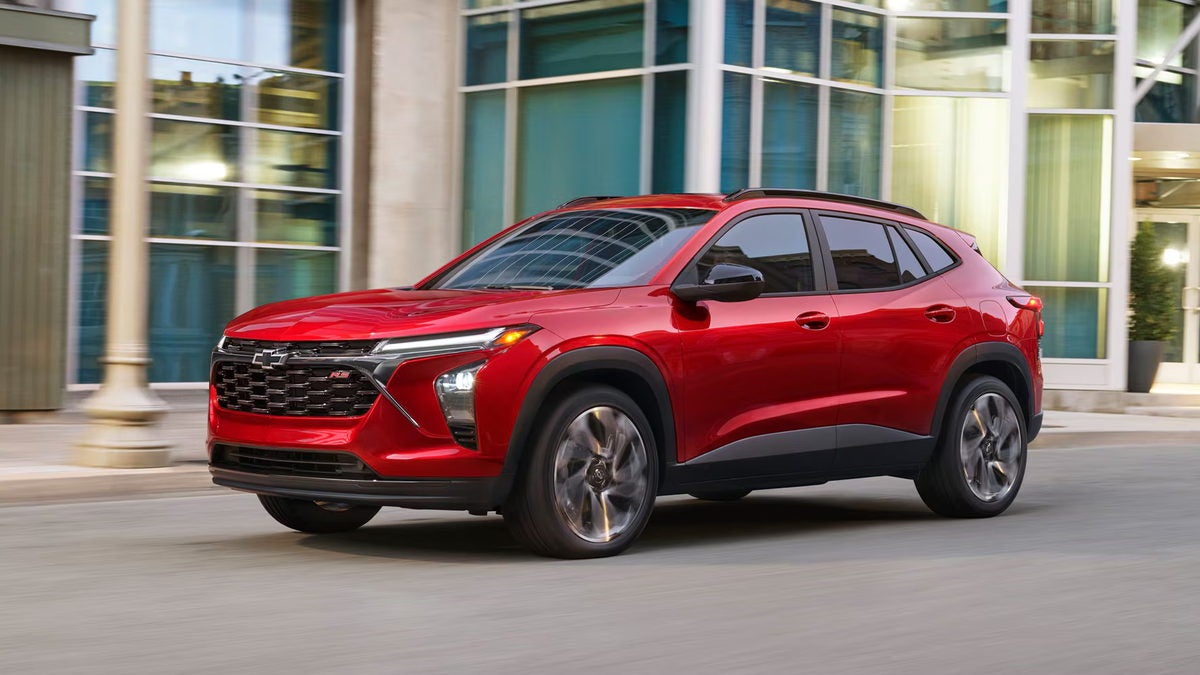
Test the 2026 Trax on the roads you actually drive — Lash Chevrolet is on W Coshocton St in Johnstown, OH.
Find Your 2026 Trax at Lash Chevrolet
Want to see 29 mpg for yourself? Take a 2026 Trax out on OH-161 and watch the trip computer. Our Johnstown team will have one ready.
Frequently Asked Questions
What is the official EPA fuel economy rating for the 2026 Chevy Trax?
The 2026 Chevy Trax is EPA-estimated at 28 mpg city, 31 mpg highway, and 29 mpg combined. Every trim shares that rating because the entire lineup uses one 1.2L turbocharged three-cylinder engine, a six-speed automatic transmission, and front-wheel drive.
That works out to about 3.4 gallons per 100 miles of mixed driving, or roughly 13.4 cents a mile in fuel at Ohio's recent average near $3.90 a gallon.
Why do some sources say the Chevy Trax gets 30 MPG combined?
Because that was the 2025 rating. The 2025 Trax was EPA-rated 28 city / 32 highway / 30 combined, and the 2026 model is rated one mpg lower on the highway and combined figures at 28 / 31 / 29.
The mechanical package did not change between the two years, so older brochures, carryover listings, and some manufacturer pages still show the 30 mpg number. For a 2026 Trax, 29 mpg combined is the current figure to budget against.
Is the 2026 Chevy Trax available with all-wheel drive?
No. Every 2026 Trax is front-wheel drive, including the rugged-looking ACTIV trim. There is no all-wheel-drive option and no hybrid version, which is part of why the fuel economy rating is identical across the lineup.
If all-wheel traction is a must for your driveway or your winter commute, we would point you toward the Trailblazer or Equinox instead. Our Johnstown team can compare them side by side with you.
How far can the 2026 Trax go on a full tank of gas?
The Trax holds 13.2 gallons, which works out to roughly 370 miles of city driving, about 409 miles of highway driving, and around 383 miles of mixed driving on a full tank.
Leave yourself a reserve and plan on 330 to 370 usable miles. Expect the low end of that in an Ohio winter, when cold weather typically trims fuel economy by around 15%.
Which 2026 Trax trim gets the best gas mileage, and does it need premium fuel?
None of them get better mileage than the others. LS, 1RS, LT, 2RS, and ACTIV are all rated 28 city / 31 highway / 29 combined, so you can choose a trim purely on features, styling, and price without a fuel penalty.
The 1.2L turbo engine runs on regular 87-octane gasoline — premium is not required. Against a rival that specifies premium, that alone saves roughly $5 to $9 on every fill.