





2026 Chevy Silverado 1500 MPG & Fuel Economy by Engine
Every available engine rated — city, highway, and combined MPG — so you can choose the powertrain that fits how you drive in Ohio
What is the fuel economy of the 2026 Chevy Silverado 1500?
The 2026 Chevy Silverado 1500 offers four engine options with varying fuel economy ratings. The 3.0L Duramax Turbo-Diesel leads the lineup at an estimated 23 city / 30 highway / 26 combined mpg (2WD). The 2.7L Turbo-Four returns approximately 20 city / 26 highway / 22 combined mpg (2WD). The 5.3L V8 delivers around 17 city / 23 highway / 19 combined mpg (2WD), and the 6.2L V8 rates at approximately 16 city / 21 highway / 18 combined mpg (2WD). For full specs across all powertrain configurations, see our 2026 Silverado 1500 specs page.
Fuel economy matters more in a full-size pickup than people sometimes expect — because the Silverado 1500 is a daily driver for a lot of Ohio households, not just a weekend work truck. Whether you're covering rural roads outside Johnstown, running the Columbus metro daily, or hauling gear to a job site in Licking County, your engine choice has a real and ongoing impact on what you spend at the pump. The 2026 Silverado 1500's four available engines span a wide range of efficiency profiles, from the diesel-leading 30 mpg highway down to the 6.2L V8 optimized for towing and performance.
This guide breaks down the EPA fuel economy estimates for every 2026 Silverado 1500 engine option — in both 2WD and 4WD configurations — and explains the technology behind each powertrain's efficiency. We'll also cover which engine makes the most sense for different use cases, so you can walk into Lash Chevrolet with a clear sense of what you're choosing and why.
Key Takeaways
- The 3.0L Duramax Turbo-Diesel is the most fuel-efficient Silverado 1500 option at an estimated 26 mpg combined (2WD)
- The 2.7L Turbocharged Four-Cylinder offers the best balance of efficiency and everyday performance for non-towing use
- The 5.3L V8's Dynamic Fuel Management system deactivates cylinders at light throttle to improve real-world fuel economy
- 4WD configurations reduce fuel economy by approximately 1–2 mpg combined across all engine options
- All EPA estimates are for the base configuration; real-world results vary based on payload, driving conditions, and terrain
- The 6.2L V8 trades fuel economy for best-in-class towing and performance — it's the right call when capability, not efficiency, is the priority
2026 Silverado 1500 Engine Lineup Overview
The 2026 Chevrolet Silverado 1500 offers four distinct engines, each engineered for a specific kind of buyer. Chevrolet's approach is to match powertrain to purpose rather than offer a one-size-fits-all solution — which means the buyer who wants maximum towing capability chooses differently than the buyer whose priority is minimizing fuel costs over 30,000 annual miles. Understanding each engine's character before you choose makes a meaningful difference in long-term ownership satisfaction.
2.7L Turbocharged Four-Cylinder
310 hp / 420 lb-ft torque. The standard engine across most trims — strong everyday performance with competitive city and highway fuel economy
5.3L EcoTec3 V8
355 hp / 383 lb-ft torque. The all-around workhorse with Dynamic Fuel Management cylinder deactivation — balances capability and efficiency at mid-range trim levels
6.2L EcoTec3 V8
420 hp / 460 lb-ft torque. The performance engine of the lineup — maximum towing, maximum power, and the trade-off is the lowest fuel economy rating
3.0L Duramax Turbo-Diesel
305 hp / 495 lb-ft torque. Best-in-class fuel economy across the lineup — particularly dominant on the highway, where diesel efficiency advantages are most pronounced
2.7L Turbocharged Four-Cylinder: Best Everyday Efficiency
The 2.7L turbocharged four-cylinder is the standard engine on the majority of 2026 Silverado 1500 trims and, for buyers who don't regularly tow near maximum capacity, it's arguably the most well-rounded choice in the lineup. The engine produces 310 horsepower and 420 lb-ft of torque — more torque than the naturally aspirated 5.3L V8 at lower RPMs — which translates to strong pull-away feel in everyday driving without the fuel economy penalty of a larger displacement engine.
Chevrolet uses an Active Thermal Management system on the 2.7L that accelerates engine warm-up — reducing the fuel-penalty cold-start phase that every gasoline engine experiences in Ohio winters. Combined with an 8-speed automatic transmission and stop/start technology, the 2.7L returns an EPA-estimated 20 city / 26 highway / 22 combined mpg in 2WD configuration. That's a competitive number for a full-size half-ton truck with genuine payload capability.
2WD Fuel Economy
Est. 20 city / 26 highway / 22 combined mpg — among the best gasoline ratings for a full-size half-ton pickup
4WD Fuel Economy
Est. 18 city / 24 highway / 20 combined mpg — a modest 2 mpg penalty for the added capability of four-wheel drive
Best For
Daily commuting, light towing up to 7,200 lbs, and buyers who want full-size truck practicality without the V8 fuel cost
Turbo-Four vs. V8: The Numbers Behind the Choice
At 22 mpg combined versus the 5.3L V8's 19 mpg combined, the 2.7L Turbo-Four saves roughly 3 mpg in everyday driving. Over 15,000 annual miles at $3.50/gallon, that translates to approximately $175–$200 in annual fuel savings — not transformational, but real money over a typical ownership period of five or more years.
5.3L EcoTec3 V8: The All-Around Workhorse
The 5.3L EcoTec3 V8 is the engine most Silverado buyers picture when they think "full-size truck." It delivers 355 horsepower, 383 lb-ft of torque, and a towing capacity of up to 11,500 lbs — making it the most capable gasoline engine for buyers who regularly pull trailers, boats, or heavy equipment. It's also the engine with the longest track record in the Silverado lineup, which means proven long-term durability data that many buyers find reassuring.
Fuel economy is where the 5.3L makes its trade-off compared to the Turbo-Four. At an EPA-estimated 17 city / 23 highway / 19 combined mpg (2WD), it consumes more fuel per mile in every driving scenario. Chevrolet partially offsets this with Dynamic Fuel Management (DFM) — a system that continuously varies the number of active cylinders from 2 to 8 depending on load demands. Under light throttle on the highway, DFM can effectively run the engine as a 4-cylinder, improving real-world highway efficiency beyond what the EPA combined number suggests.
2WD Fuel Economy
Est. 17 city / 23 highway / 19 combined mpg with Dynamic Fuel Management active on select variants
4WD Fuel Economy
Est. 16 city / 21 highway / 18 combined mpg — AWD and 4WD configurations see a consistent 1–2 mpg combined reduction
Best For
Regular towing, work truck use, buyers who want proven V8 durability and up to 11,500 lbs towing capacity
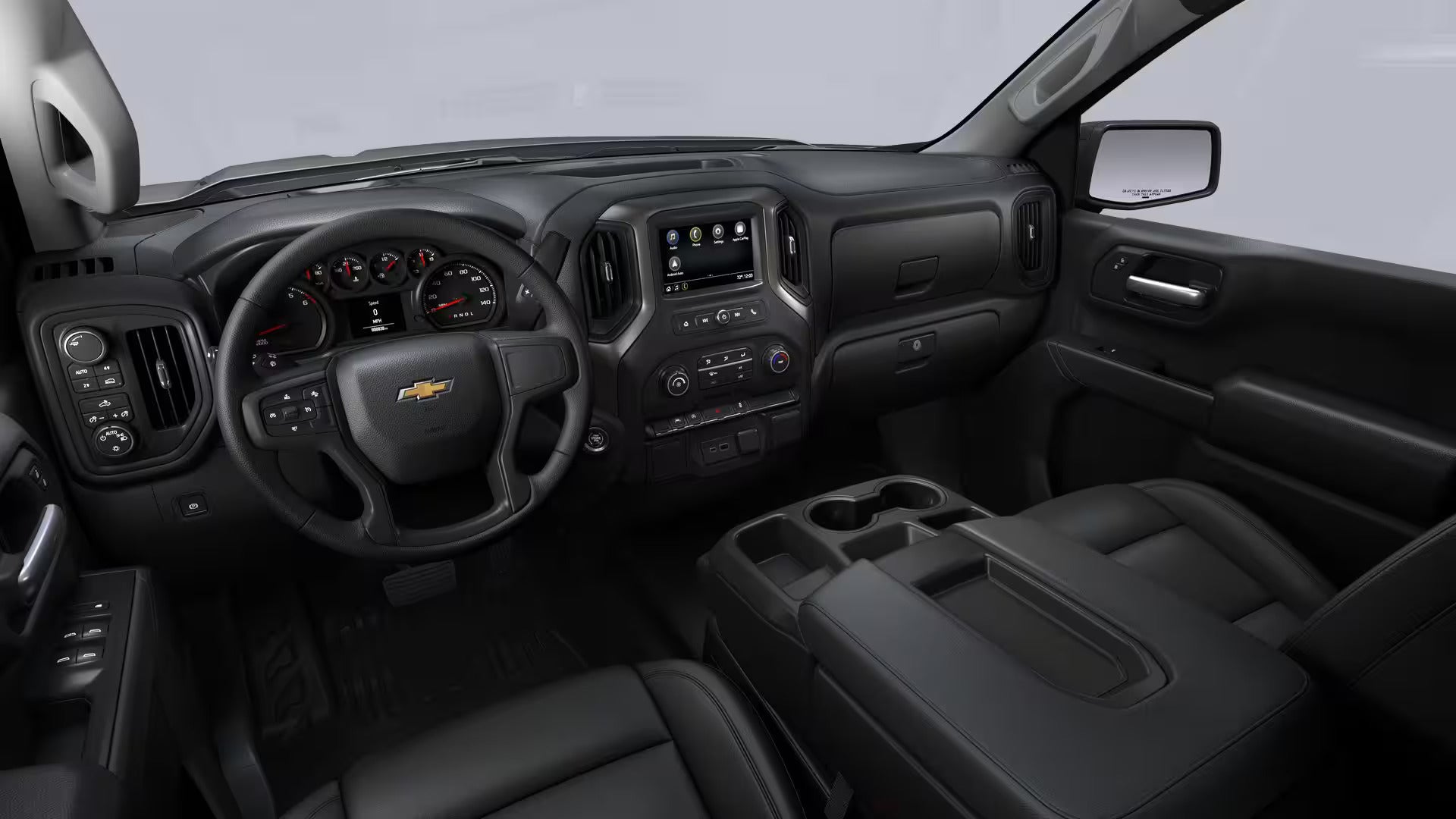
The Silverado's driver-focused interior keeps fuel economy data, trip readouts, and engine information readily accessible through the configurable Driver Information Center.
6.2L EcoTec3 V8: Maximum Performance, Premium Fuel Required
The 6.2L EcoTec3 V8 is the Silverado 1500's performance flagship — 420 horsepower, 460 lb-ft of torque, and maximum towing capacity of up to 13,300 lbs when properly equipped. It's available on LTZ, High Country, and Trail Boss trim configurations and pairs with a 10-speed automatic transmission for broader gear spread and optimized efficiency across the RPM range. If you're regularly pulling at or near maximum capacity, the 6.2L is the right call regardless of its fuel economy standing.
On fuel economy, the 6.2L earns its numbers honestly: it's a large-displacement performance engine, and it uses fuel accordingly. EPA estimates come in at approximately 16 city / 21 highway / 18 combined mpg (2WD) — roughly 1 mpg below the 5.3L V8 in most scenarios. Like the 5.3L, it uses cylinder deactivation technology to moderate highway fuel consumption, but the efficiency advantage of the smaller engine's lighter reciprocating assembly is hard to fully overcome at displacement parity. Buyers choosing the 6.2L are generally prioritizing capability, and that's exactly the right trade-off to make. Note that the 6.2L is rated for premium fuel for best performance, which also adds to operating costs beyond the base MPG figures.
2WD Fuel Economy
Est. 16 city / 21 highway / 18 combined mpg — lowest gasoline efficiency in the lineup, offset by best-in-class V8 towing capacity
4WD Fuel Economy
Est. 15 city / 20 highway / 17 combined mpg in 4WD-equipped configurations
Best For
Maximum towing up to 13,300 lbs, performance-oriented buyers, High Country and LTZ owners who want every available horsepower
3.0L Duramax Turbo-Diesel: Best MPG in the Lineup
For buyers who prioritize fuel economy above all other powertrain attributes, the 3.0L Duramax Turbo-Diesel is the clear answer. With an EPA-estimated 23 city / 30 highway / 26 combined mpg (2WD), it outpaces every gasoline option in the 2026 Silverado 1500 lineup by a substantial margin — and at 30 mpg highway, it competes favorably with many midsize SUVs. If your annual mileage is high or your regular route involves significant highway miles, the diesel's fuel savings can meaningfully offset any upfront cost premium over the gasoline engines.
The 3.0L Duramax produces 305 horsepower and 495 lb-ft of torque — making it the torque leader in the entire Silverado 1500 powertrain lineup. Diesel torque is available from very low RPM, which translates to effortless pull at highway speeds and confident acceleration when merging or passing. Towing capacity is rated up to 9,300 lbs — lower than the V8 options but entirely adequate for trailers, campers, and boats that the average owner hauls. The diesel also pairs with a 10-speed automatic transmission and benefits from diesel's characteristically lower fuel cost per gallon at most Ohio stations.
2WD Fuel Economy
Est. 23 city / 30 highway / 26 combined mpg — best fuel economy of any 2026 Silverado 1500 powertrain by a significant margin
4WD Fuel Economy
Est. 22 city / 26 highway / 24 combined mpg — 4WD diesel still outperforms 2WD gasoline options across all scenarios
Best For
High-mileage drivers, daily highway commuters, buyers who tow regularly but don't need V8-level capacity — and anyone who prioritizes total cost of ownership
Diesel Payback: When Does It Make Sense?
The Duramax diesel option typically adds to the sticker price compared to the 2.7L Turbo-Four. At current Ohio diesel prices and the 4 mpg combined advantage the diesel holds over the 2.7L, drivers covering 15,000+ miles annually can generally expect to recover the premium within three to four years of ownership — after which every tank is net savings. The math improves significantly for buyers with higher annual mileage.
2026 Silverado 1500 MPG Comparison: All Engines & Drivetrains
The table below consolidates EPA fuel economy estimates for all four 2026 Silverado 1500 engine options across both 2WD and 4WD configurations. These figures represent EPA estimates for the base configurations of each engine — actual results vary based on payload, driving conditions, towing frequency, and individual driving style. For a deeper look at how these powertrain choices affect capability, see our 2026 Silverado 1500 towing capacity guide.
| Engine | Drivetrain | City MPG | Highway MPG | Combined MPG | Max Towing |
|---|---|---|---|---|---|
| 3.0L Duramax Turbo-Diesel | 2WD | 23 | 30 | 26 | 9,300 lbs |
| 3.0L Duramax Turbo-Diesel | 4WD | 22 | 26 | 24 | 9,300 lbs |
| 2.7L Turbo-Four | 2WD | 20 | 26 | 22 | 7,200 lbs |
| 2.7L Turbo-Four | 4WD | 18 | 24 | 20 | 7,200 lbs |
| 5.3L EcoTec3 V8 | 2WD | 17 | 23 | 19 | 11,500 lbs |
| 5.3L EcoTec3 V8 | 4WD | 16 | 21 | 18 | 11,500 lbs |
| 6.2L EcoTec3 V8 | 2WD | 16 | 21 | 18 | 13,300 lbs |
| 6.2L EcoTec3 V8 | 4WD | 15 | 20 | 17 | 13,300 lbs |
Green rows indicate the diesel's best-in-class fuel economy figures. All estimates are EPA-rated; actual mileage will vary. Towing capacity figures reflect maximum-rated configurations and require proper equipment packages.
Real-World Fuel Economy: Ohio Driving Conditions
EPA estimates are a useful benchmark, but real-world fuel economy in Central Ohio driving conditions will deviate from those figures in predictable ways. Understanding where the variance comes from helps you set realistic expectations for your Silverado's performance at the pump.
Highway Driving (I-71, US-36, US-62)
Extended highway driving is where all four Silverado engines perform closest to their EPA highway ratings. The diesel's 30 mpg highway figure is achievable under steady cruise conditions, and the gasoline engines' highway numbers are similarly attainable on flat, consistent stretches. Speeds above 70 mph begin to erode efficiency across all options — aerodynamic drag increases significantly above this threshold, affecting the turbo engines most noticeably.
City and Stop-and-Go Driving
City fuel economy suffers more than highway for gasoline options due to the frequency of cold-start cycles, idling, and acceleration from stops. The 2.7L Turbo-Four's thermal management system partially mitigates the cold-start penalty, and the V8's cylinder deactivation helps during steady low-load urban cruising. The diesel, counterintuitively, performs somewhat below its city EPA figure in true urban stop-and-go due to diesel combustion efficiency being less optimized for constant low-speed cycling compared to longer-haul use.
Towing and Payload Impact
Pulling a trailer — even a modest one — dramatically reduces observed fuel economy across all engines. Towing a 5,000-lb trailer with the 5.3L V8 on a flat Ohio highway can reduce highway mpg by 25–35%, depending on trailer aerodynamics and speed. This is a relevant consideration for buyers who regularly tow: the diesel's efficiency advantage grows when the truck is under load, because diesel engines maintain efficiency at higher torque demands better than gasoline alternatives.
Tips to Maximize Your 2026 Silverado's Fuel Efficiency
Regardless of which engine you choose, these practices consistently improve real-world fuel economy on the Silverado 1500:
Use 2WD When Possible
For daily driving on dry pavement, keeping the Silverado in 2WD mode saves 1–2 mpg combined compared to running in 4WD Auto or 4WD modes unnecessarily
Maintain Proper Tire Pressure
Under-inflated tires increase rolling resistance and can reduce fuel economy by 1–2 mpg. Check pressures monthly — especially as Ohio's temperature swings affect tire pressure seasonally
Follow the Oil Change Schedule
Fresh oil reduces internal engine friction. Lash Chevrolet's Silverado oil type and capacity guide covers the right spec for each engine to keep efficiency optimized
Minimize Cold Idling
Extended cold idling burns fuel without moving the truck. The Silverado's Active Thermal Management warms the engine efficiently — brief warm-up and go is better than prolonged idling for both fuel use and engine wear
Remove Unnecessary Payload
Every 100 lbs of unnecessary weight in the bed reduces fuel economy by approximately 0.1–0.2 mpg. Clean out the bed of gear you're not using on a given trip
Use Cruise Control on Highways
Maintaining steady speed via cruise control outperforms driver-modulated throttle for highway fuel economy — especially on I-71 and US-36 where long consistent grades reward steady-state operation
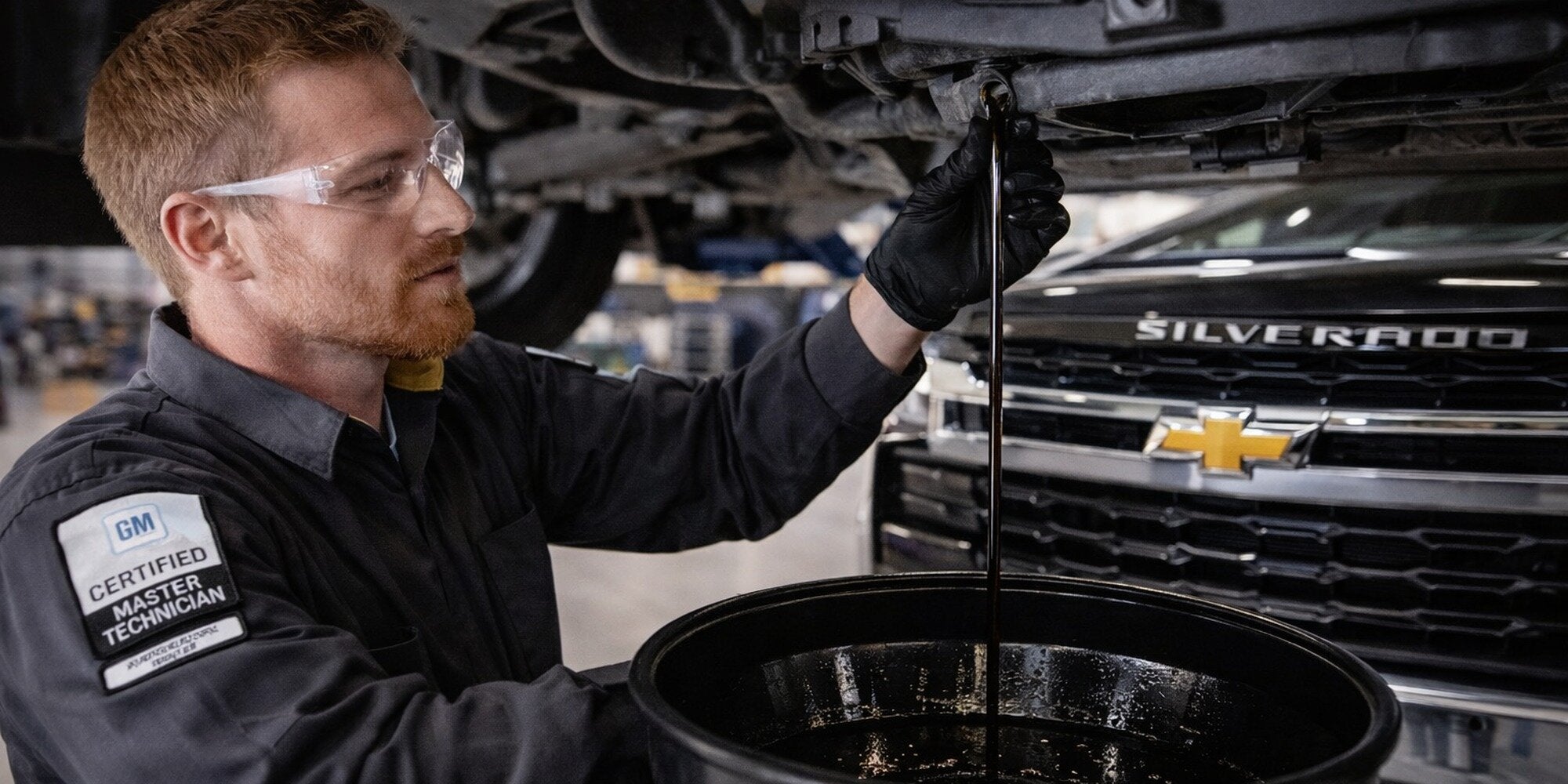
Regular Chevrolet Certified Service maintenance at Lash Chevrolet — including proper oil spec and tire pressure — keeps your Silverado operating at its EPA-rated efficiency.
Find Your 2026 Silverado 1500 at Lash Chevrolet
Ready to choose your engine and get behind the wheel? Lash Chevrolet carries a full inventory of 2026 Silverado 1500 trucks across all trim levels and engine configurations. Visit us at 755 W Coshocton St in Johnstown, OH — our team can walk you through the efficiency tradeoffs in person and help you match the right powertrain to the way you actually use your truck. We're open Monday through Saturday.
Frequently Asked Questions
What is the best MPG for the 2026 Chevy Silverado 1500?
The best fuel economy in the 2026 Silverado 1500 lineup belongs to the 3.0L Duramax Turbo-Diesel, rated at an estimated 23 city / 30 highway / 26 combined mpg in 2WD configuration. Among gasoline options, the 2.7L Turbocharged Four-Cylinder leads with an estimated 20 city / 26 highway / 22 combined mpg (2WD).
Does the 2026 Silverado 1500 come with a diesel engine option?
Yes. The 2026 Silverado 1500 is available with a 3.0L Duramax Turbo-Diesel engine producing 305 horsepower and 495 lb-ft of torque. It is the most fuel-efficient powertrain in the lineup and is available on select trim levels including LT, RST, LTZ, and High Country configurations.
How does towing affect the Silverado 1500's fuel economy?
Towing significantly reduces observed fuel economy on all Silverado 1500 engine options. Pulling a trailer in the 4,000–6,000 lb range typically reduces highway mpg by 25–35% depending on trailer aerodynamics, terrain, and speed. The 3.0L diesel maintains a relative efficiency advantage over gasoline engines when under towing load due to diesel combustion characteristics at higher torque demands.
Is the 2.7L four-cylinder a good choice for the Silverado 1500?
Yes — for buyers who don't regularly tow at or near maximum capacity, the 2.7L Turbocharged Four-Cylinder is an excellent choice. It produces 310 hp and 420 lb-ft of torque (more low-end torque than the 5.3L V8), returns the best fuel economy of any gasoline option at up to 22 mpg combined (2WD), and handles light-to-moderate towing up to 7,200 lbs without issue.
Does the 5.3L V8 in the Silverado use cylinder deactivation?
Yes. The 5.3L EcoTec3 V8 uses Chevrolet's Dynamic Fuel Management (DFM) system, which continuously varies the number of active cylinders between 2 and 8 based on real-time load demand. Under light throttle at highway speeds, DFM can effectively operate the engine as a smaller unit, improving real-world fuel economy beyond what the base EPA rating suggests.
Does 4WD reduce fuel economy on the Silverado 1500?
Yes. 4WD-equipped Silverado 1500 configurations typically return 1–2 mpg less combined compared to equivalent 2WD configurations across all engine options. Running in 2WD mode on dry pavement for everyday driving helps preserve fuel economy on 4WD-capable trucks — switching to 4WD only when conditions actually call for it is the most efficient approach.